
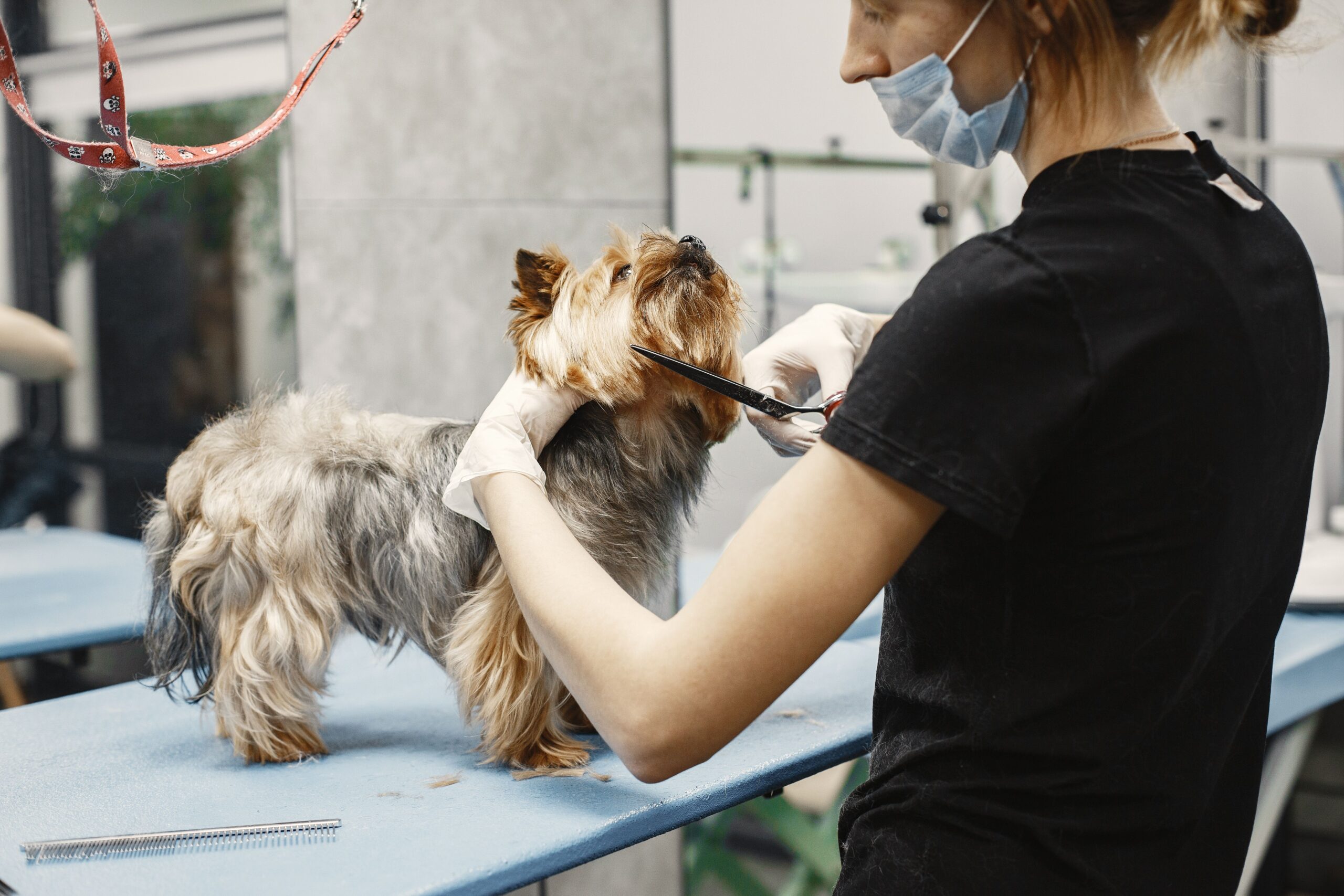
Why home grooming works — and why it is not just dog walking with scissors
Dog grooming from home looks like a natural next step from dog walking: same customers, same love of dogs, work from your own premises. In practice it is a different business. Dog walking happens out of the house; grooming happens in it, with clients arriving all day, water and hair everywhere, dogs that may be nervous or aggressive, and equipment that costs real money and needs maintenance. Those differences are what make home grooming profitable — clients pay for a skilled, hands-on service they cannot easily do themselves — and what make its setup more demanding than a walking round.
This guide covers the setup in order: the space, the qualifications clients and insurers expect, the costs, the council and home permissions, insurance, pricing, and how to win first clients. It is general information, not legal advice, and local rules vary — the final check is always with your own council and insurer.
The space: a room that can get wet, hairy, and noisy
The first decision is where grooming happens, and it shapes everything else. A spare room can work for small dogs and low volumes, but it needs a washable floor, good drainage or a portable bath solution, ventilation, and a door that keeps dogs contained. A converted garage is the most common home grooming space, because it separates the business from the living areas, handles water and noise better, and gives clients a clear entrance that is not your front door. A garden studio is a third option, but it is the most expensive and the most likely to need planning permission and building regulations approval for the building work itself.
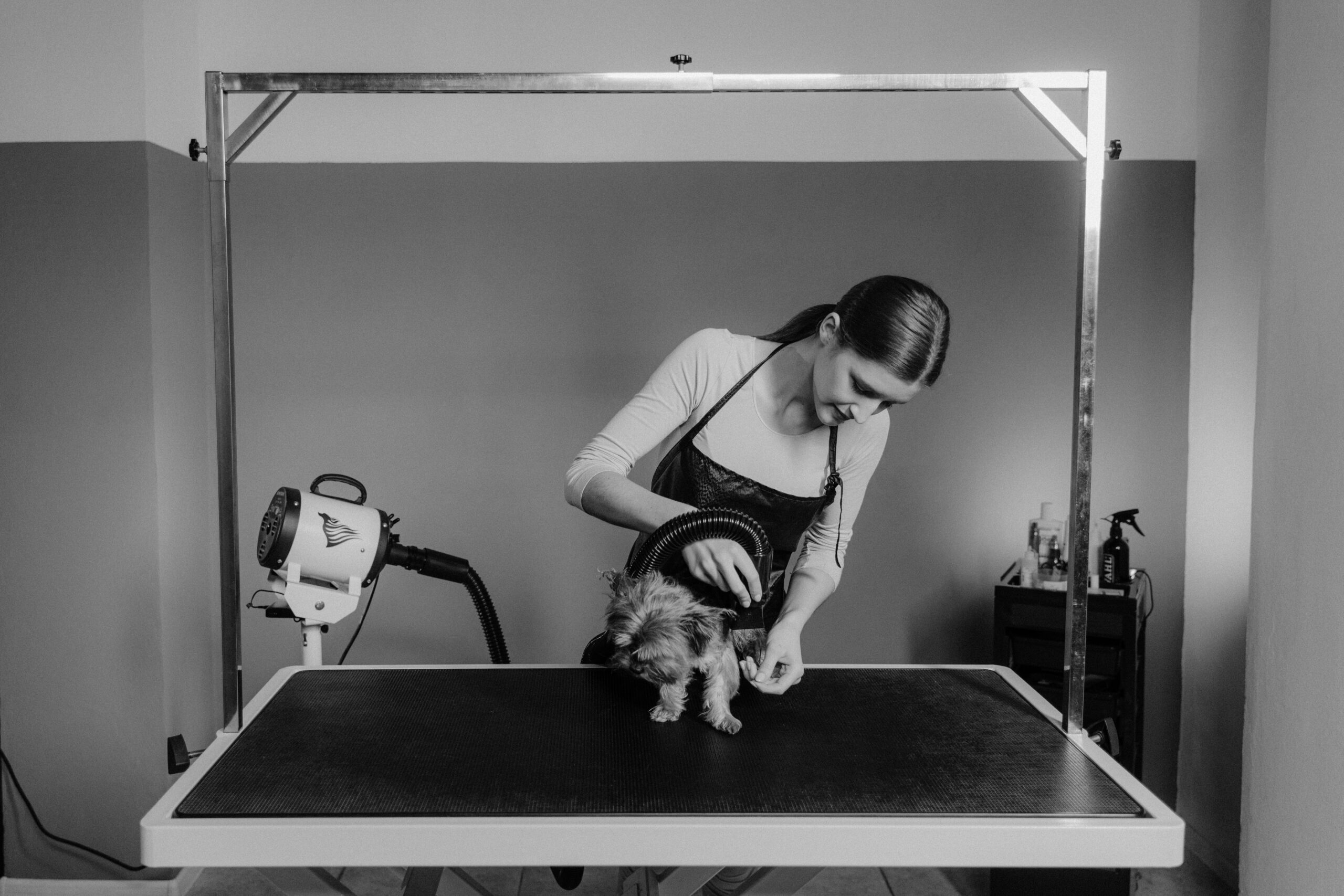
Whichever space you choose, plan the workflow before you buy equipment: a waiting area where dogs arrive, a bathing area with a non-slip surface, a drying area, and a grooming table area with good light. Dogs should never be left unattended on a table or in a bath, and the space needs to be cleanable between dogs — hygiene is both a professional standard and a selling point clients notice immediately. Sound matters too: dryers are loud, and a grooming room next to a neighbour's bedroom wall at 8am is a complaint waiting to happen. Keep noisy work within reasonable hours, and think about sound insulation if the room shares a wall.
Qualifications: not legally required, but expected in practice
There is no specific licence required to groom dogs in the UK, and no law that says you must hold a grooming qualification before you start. That legal position is often quoted as if it settled the question, but it does not, because two practical gatekeepers do require evidence of competence: clients and insurers. Clients choosing someone to handle their dog with clippers and scissors will ask about training, and many will choose a qualified groomer over an unqualified one at the same price. Insurers, similarly, often ask for proof of recognised grooming qualifications before issuing public liability cover, and some will not insure an unqualified groomer at all.
The sensible route is a recognised grooming qualification before your first paid groom, or at least alongside your first low-volume clients if you are already experienced. Courses vary from short introductory certificates to longer diplomas, and published guides put training costs in a wide range depending on length and provider — allow a four-figure sum for a substantial qualification, and check what the course actually includes: handling nervous and aggressive dogs, breed-standard cuts, skin and coat conditions, and first aid are the skills that matter in the room, not just clipping technique. Canine first aid training is worth doing separately even if your grooming course touches on it, because a groomer is the person on hand when a dog is injured or becomes unwell.
Startup costs: a realistic home-based budget
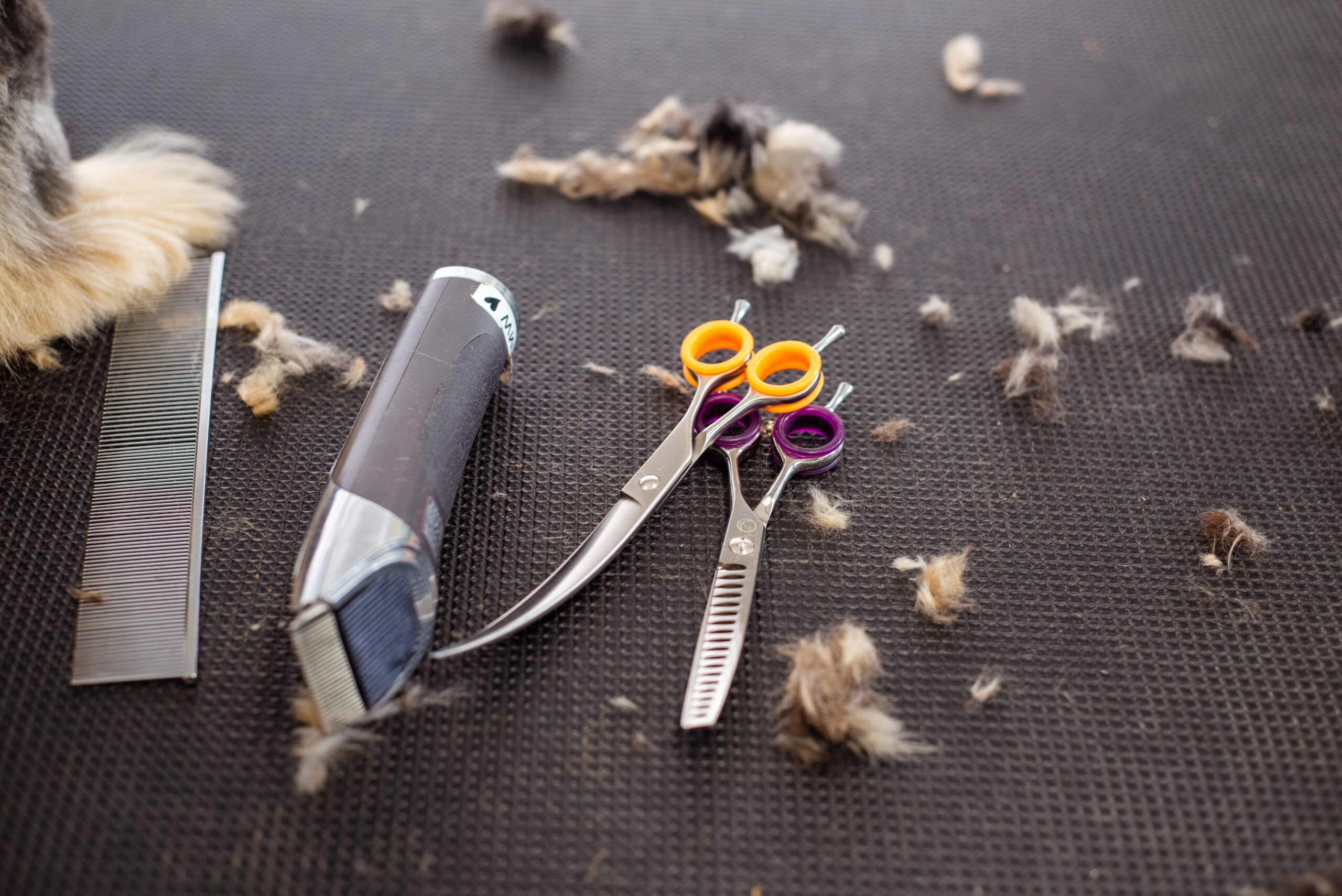
Published 2026 guides put the cost of starting a home-based grooming business roughly at £1,000–£2,500, excluding training, with basic grooming kit roughly £500–£1,200 and insurance roughly £150–£300 a year within that range. A leaner start is possible with second-hand equipment, and a fuller setup costs more — treat the range as a planning band, not a quote, and price your own list before committing. The kit list itself is worth itemising, because it is where under-budgeting happens: clippers and blades, scissors and thinning shears, a grooming table with a restraint loop, a bath or bathing system, a high-velocity dryer and a stand dryer, brushes and combs for different coat types, shampoos and conditioners for different coats and skin conditions, nail clippers and a grinder, ear cleaning supplies, and cleaning and disinfecting products for the room and tools between dogs.
Ongoing costs are lower than the startup figure but not trivial: shampoo and consumables, blade sharpening and replacement, electricity and water (grooming is water- and power-hungry), insurance, phone and booking software, and marketing. One cost new groomers underestimate is time: a full groom for a medium dog commonly takes one to two hours including bathing, drying, and finishing, and a large or double-coated dog takes longer. Your diary, not your equipment, is the real capacity limit — three to four dogs a day is a full day for a solo home groomer, and booking beyond that is how quality and safety slip.
Council, planning, and home permissions
Grooming itself needs no specific licence, but running it from home triggers the same checks as any home business, and grooming triggers them more sharply than desk work because clients visit all day. Planning permission becomes relevant if the business changes the character of the property: regular client visits, staff, delivery vans, noise, and smells all count towards that test. A quiet groomer seeing two or three dogs a day in a converted garage will usually pass; a busy salon with cars queuing in a residential street may not. If you are close to the line, ask your council's planning team before you build a client base on an unlawful use, and consider a certificate of lawfulness for a proposed use.
Two private permissions matter just as much. If you rent, check your tenancy agreement — many restrict business use, and council tenants need the council's permission as landlord. If you have a mortgage, check your mortgage terms, because some require the lender's permission for business use, particularly where visitors come onto the premises. Tell your home insurer you groom from home: business equipment, stock, and visitors may not be covered by a standard home policy, and a claim arising from undisclosed business use can be declined. Business waste is a further check: hair, dirty water, and used products are business waste, not household waste, so arrange a proper disposal route rather than putting them in the household bin.
Insurance: what a groomer actually needs
For a groomer, insurance is not optional in any practical sense, even though no law compels a sole trader to hold it. Public liability covers claims if a client, visitor, or member of the public is injured or their property damaged because of your business — a client slipping on a wet floor in your grooming room, for example. Care, custody, and control cover, sometimes included in a groomer's policy and sometimes an extension, covers injury to a dog in your care or damage to a client's property while it is with you — the dog that is cut during grooming, or that escapes and is injured. Check whether your policy includes this, because a standard public liability policy may not cover property in your custody, and for a groomer, the dog is the property in your custody.
Published guides put groomers' insurance roughly at £150–£300 a year for a home-based setup, with some brokers advertising monthly payment at roughly £8–£10 a month for basic public liability. Those are starting points for quotes, not prices — your qualifications, turnover, and claims history move the figure. Also check whether the policy requires qualifications, what it excludes (for example, certain breeds, or grooming under sedation, which you should never do), and whether it covers grooming at clients' homes if you offer a mobile service alongside the home salon. If you employ anyone, even part-time help, employers' liability insurance becomes a legal requirement, with a minimum cover of £5 million.
Pricing: charge for the dog, not just the hour
Grooming pricing is usually per dog, by size and coat, not by the hour — and that is the right model, because a large double-coated dog takes far longer than a small smooth-coated one. Published guides put typical UK grooming prices roughly in these bands: small dogs from around £25–£35, medium breeds roughly £40–£55, and large or double-coated dogs roughly £60–£80, with variation by area — London and the South East sit above these ranges, rural areas below them. Those are starting points for your own price list, not a tariff: price for your area, your costs, and your skill level, and revisit prices as your diary fills.
Three pricing habits separate profitable groomers from busy ones. First, price the difficult dogs properly: matted coats, nervous dogs, and dogs that need extra handling take longer and carry more risk, and a matted-coat surcharge or a refusal to groom a severely matted dog (with a vet referral) is professional, not rude. Second, set a minimum and a cancellation policy: a no-show dog is a lost slot that cannot be resold at short notice, so a deposit or a cancellation fee for late cancellations protects your diary. Third, raise prices for new clients first and give existing clients advance notice of increases, as covered in the pricing guide — a small annual increase is accepted far more readily than a sudden large jump.
Winning your first clients
Grooming clients come from trust, and trust comes from evidence. Before your first paid groom, groom dogs for friends and family at a reduced rate or for a testimonial and photographs — with the owner's permission — and build a simple portfolio showing before-and-after results for different coat types. A Google Business Profile, a Facebook or Instagram page with real photographs of your work (not stock images of other groomers' dogs), and listings in local directories will bring enquiries, but the strongest channel for a home groomer is local: dog walkers, vets, pet shops, and existing clients' recommendations. Offer a referral incentive, such as a small discount on the next groom for both the referrer and the new client, and treat every first groom as an audition — the client is judging the cut, the handling, and the cleanliness of your room, and will tell other dog owners either way.
A practical first-month plan is: one or two dogs a day, three or four days a week, at an introductory price, with time between dogs for cleaning and notes on each dog's coat, temperament, and cut. That pace builds a portfolio, tests your pricing and diary, and leaves room to fix problems before they become reviews. Growth after that comes from regular clients on a six- to eight-week cycle, not from one-off grooms — a full diary of repeat clients is the goal, and it is what makes a home grooming business stable.
FAQ
Do I need a licence to groom dogs from home in the UK?
No specific grooming licence is required. Grooming falls outside the regulated animal activities that need a council licence, unlike boarding or day care. But planning, landlord or mortgage permission, home insurance disclosure, and business waste rules still apply to a home grooming business.
Do I need qualifications to groom dogs?
Not legally, but clients and insurers commonly expect them, and many insurers ask for proof of recognised qualifications before issuing cover. A recognised grooming qualification, plus canine first aid, is the sensible route before your first paid groom.
How much does it cost to start a home dog grooming business?
Published 2026 guides put a home-based setup roughly at £1,000–£2,500 excluding training, with basic kit roughly £500–£1,200 and insurance roughly £150–£300 a year. A leaner start with second-hand equipment is possible, and training costs are additional.
How much do dog groomers charge in the UK?
Typical published bands are roughly £25–£35 for small dogs, £40–£55 for medium breeds, and £60–£80 for large or double-coated dogs, varying by area. Price for your area and costs, and price difficult or matted coats properly.
How many dogs can a home groomer do in a day?
Three to four dogs a day is a full day for a solo home groomer, given that a full groom commonly takes one to two hours per dog including bathing and drying. Booking beyond that risks quality and safety.
Can I groom dogs in a spare room?
Yes for small dogs and low volumes, if the room has a washable floor, a bathing solution, ventilation, containment, and good light. A converted garage is the more common choice, as it separates the business from living areas and handles water and noise better.