

Why cleaning is a strong home-based start
A cleaning business is one of the most practical ways to start earning from home in the UK. You need no shop, no stockroom, and no specialist degree. Clients pay for reliability and trust — turning up on time, cleaning to an agreed standard, and looking after keys and homes properly — and regular clients pay weekly or fortnightly, which gives you recurring income from the start.
The work happens in clients' homes and workplaces, but the business itself is run from home: quoting, scheduling, invoicing, and ordering supplies. That is also where most new cleaners go wrong. They focus on mops and products, and neglect the unglamorous setup — HMRC registration, insurance, chemical safety, and data protection — that commercial clients and letting agents will ask about before they hire you.
This guide walks through that setup in order, with realistic costs and pricing, and a plan for the first ten clients. It is general information, not legal advice.
Step 1: Choose your niche before you buy anything
"Cleaning" is too broad to market. The niche you choose decides your price, your equipment, your clients, and your working hours. The main options for a home-based start are:
- Regular domestic cleaning. Weekly or fortnightly cleans for private households. Steady, local, and the easiest first niche. Lower hourly rate than specialist work, but the most reliable repeat income.
- End-of-tenancy cleaning. One-off deep cleans for landlords and letting agents, usually to an inventory checklist. Higher fee per job, but lumpy income and higher standards — agents check against the check-in inventory.
- Holiday let changeovers. Cleaning between guests, often to a tight turnaround window. Good money in tourist areas, but weekend work and strict timing.
- Office and commercial cleaning. Regular cleans for small offices, shops, and clinics, usually outside office hours. More paperwork — risk assessments and method statements — but larger contracts.
- Specialist cleaning. Carpet cleaning, oven cleaning, or after-builders cleaning. Higher rates, but specialist equipment and training costs up front.
For a first business, regular domestic cleaning plus one specialist add-on — end-of-tenancy or holiday lets — is a sensible combination: the regular work pays the bills, and the specialist jobs lift the average rate. Do not try to offer everything on day one. A client who wants a carpet clean will ask whether you own the machine; saying "not yet" is better than hiring one at short notice and learning on their carpet.
Step 2: Pick a business structure and register
Most cleaners start as sole traders. Registering as a sole trader with HMRC is free, and you file a Self Assessment tax return each year, paying Income Tax and National Insurance on your profit — income minus allowable expenses. A limited company, registered with Companies House for a small online fee, gives limited liability, but brings company accounts and Corporation Tax. Many cleaners incorporate later, when they employ staff or win commercial contracts that prefer dealing with a limited company.
The key timing rule is the £1,000 trading allowance. If your gross trading income in a tax year (6 April to 5 April) is £1,000 or less, the allowance generally means you do not need to register or file. Once gross income goes over £1,000, you normally need to register for Self Assessment by 5 October following the end of that tax year, and file and pay by the following 31 January. The test is on gross income — what clients paid — not profit, and it covers all your trading income combined. Register early once you know you will pass the threshold: HMRC needs time to issue your Unique Taxpayer Reference and online account details.
Keep a separate business bank account, even as a sole trader. It is not legally required, but it makes record-keeping and tax returns dramatically simpler, and it looks professional when a commercial client asks for bank details. Set aside 20–30% of profit for tax as you go, in that account, so the January bill is planned rather than a shock.
You must register for VAT only if your taxable turnover passes £90,000 in a rolling 12-month period. That is a long way off for a solo cleaner, but watch it if you grow into a team with several contracts.
Step 3: Understand the legal requirements — there is no general licence
There is no general licence required to run a domestic or commercial cleaning business in the UK. That does not mean there are no legal obligations. The ones that actually apply to a home-based cleaner are:
Insurance
Public liability insurance is not a legal requirement for a sole trader, but it is effectively essential: it covers claims if you damage a client's property or someone is injured because of your work, such as slipping on a wet floor you have just cleaned. Published guides put a basic annual policy roughly in the £100–£300 range for a solo cleaner, depending on cover level and services. Most letting agents and commercial clients will ask to see your certificate before hiring you, so get it before you quote for that kind of work.
The moment you employ anyone — even one part-time cleaner — employers' liability insurance becomes a legal requirement, with a minimum cover of £5 million. This is the area where new cleaning businesses most often get into trouble: calling someone "self-employed" does not make them self-employed if you control their hours, supply their equipment, and set their rates. If a cleaner works only for you, on your rota, with your products, HMRC and an employment tribunal are likely to treat them as your employee, with PAYE, holiday pay, and pension duties. Get advice before building a team on subcontractors, and register as an employer and run PAYE before the first payday if you do employ staff.
Chemical safety (COSHH)
The Control of Substances Hazardous to Health (COSHH) regulations apply to cleaning chemicals. In practice, that means: store products safely and upright, never decant into unlabelled bottles, follow dilution instructions, keep safety data sheets for the products you use, wear the recommended protective equipment (gloves, and eye protection where advised), and never mix products — bleach and acidic cleaners together, for example, can produce dangerous fumes. Keep a simple written COSHH record: product name, hazard, how you use it, and what to do if it is spilled or splashed. Commercial clients will often ask for it, and it protects you if a client claims a surface was damaged.
Data protection
You will hold clients' names, addresses, phone numbers, and often key safe codes and alarm details. That is personal data, and you are responsible for keeping it secure under UK data protection law. Keep it in a password-protected system, not a notebook or a messaging group, limit who can see key codes, and delete details you no longer need. Most businesses that handle personal data also need to pay the ICO data protection fee, a small annual charge — check the ICO's guidance for your situation and whether any exemption applies.
Step 4: Startup costs and equipment
Published guides put typical startup costs for a solo cleaning business at roughly £350–£1,250, excluding a vehicle, assuming you already have transport. The breakdown is:
| Item | Typical starting cost |
| Vacuum cleaner, mop, bucket, microfibre cloths, caddy | £150–£440 |
| Initial cleaning products | £30–£60 within the equipment figure above |
| Business registration | Free as a sole trader; small Companies House fee if limited |
| Public liability insurance, first year | Around £100–£300 |
| Website, flyers, business cards, Google Business Profile | £0–£500 (profile itself is free) |
| Typical total | Roughly £350–£1,250 |
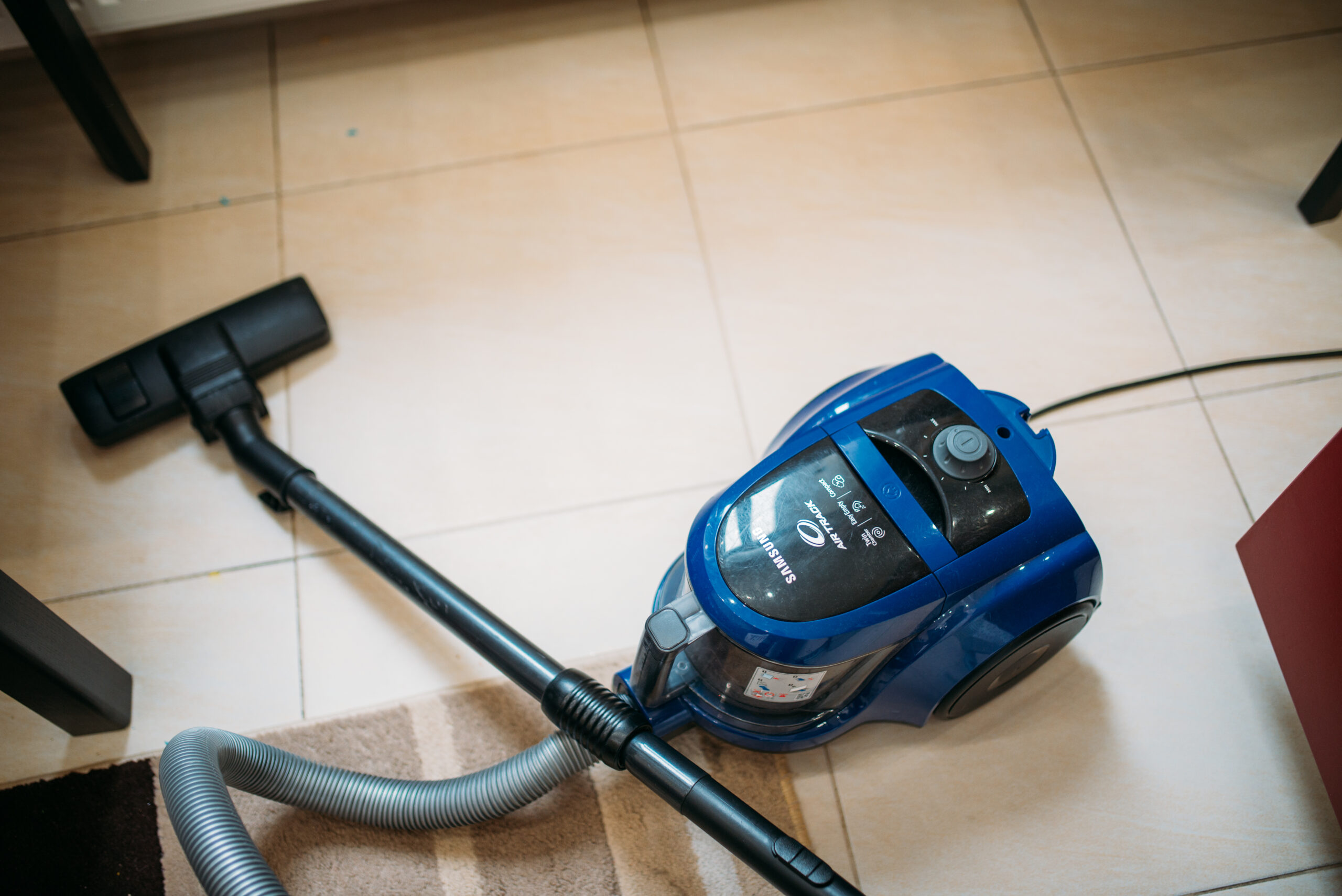
Start with a reliable vacuum cleaner — it is the one item clients judge you on — a flat mop, colour-coded microfibre cloths (one colour for bathrooms, one for kitchens, to avoid cross-contamination), and a small set of professional products: multi-surface cleaner, bathroom cleaner, kitchen degreaser, glass cleaner, and limescale remover. Buy professional concentrates where you can: they work out cheaper per clean than supermarket sprays, and they look more credible to commercial clients.
Step 5: Pricing — hourly, per-visit, or per-job
Most UK cleaners use one of three pricing methods, and the right one depends on the job:
- Hourly. Simplest for regular domestic cleaning. Published 2026 guides give a wide range — roughly £15–£25 an hour for regular domestic work, with agency rates at the higher end and independent cleaners often below them, and London above the national range. One-off and deep cleans typically command £18–£25 an hour or more.
- Fixed per-visit price. A set price for a defined clean, based on your hourly estimate. Clients like the certainty, and you keep the benefit if you work efficiently. This works well once you know how long a particular home takes.
- Per-job price. Essential for end-of-tenancy and specialist work, where the scope is fixed. Published guides put a typical 2–3 bedroom end-of-tenancy clean roughly in the £150–£300 range, and larger or dirtier properties higher, depending on size and condition.
Whichever method you choose, the maths underneath is the same. Your price must cover: your time on site, travel time and fuel, products and equipment replacement, insurance, tax and National Insurance, and unpaid time — holidays, sickness, cancellations, and admin. A cleaner charging £18 an hour is not earning £18 an hour after those costs. That is why a minimum visit length matters: a one-hour clean with twenty minutes' travel either side is barely profitable, while a two- or three-hour minimum visit makes the same rate work.
Practical pricing rules for a new cleaner:
- Set a minimum visit of two hours for domestic work, unless the client is very local.
- Quote end-of-tenancy and deep cleans only after seeing the property, or after detailed photos and a room-by-room brief — never a blind fixed price.
- State clearly what is included and what is not: inside ovens, inside fridges, windows, and ironing are extras in most domestic cleans, not defaults.
- Charge a premium for one-off cleans, because they take longer and do not lead to repeat income unless you convert them.
- Review prices annually, and tell regular clients in advance. A small annual increase, explained as covering insurance and product costs, is accepted far more readily than a sudden large jump after two years.
Frequently asked questions
Do I need a licence to start a cleaning business in the UK?
No general licence is required for domestic or commercial cleaning. You do need to register with HMRC once your income passes the trading allowance, hold appropriate insurance, and comply with COSHH, data protection, and — if you employ staff — employers' liability and PAYE rules.
Do I need qualifications to be a cleaner?
No formal qualifications are required. Training in health and safety, COSHH, or specialist techniques (such as carpet or oven cleaning) helps you win higher-paying work and commercial contracts, but it is not a legal requirement for general cleaning.
How much should I charge for cleaning?
Published 2026 guides put regular domestic cleaning roughly at £15–£25 an hour, with one-off and deep cleans higher, and end-of-tenancy cleans for a 2–3 bedroom property roughly at £150–£300 per job. Local rates, property size, and what is included matter more than any national average — check what cleaners in your area charge and price to cover all your costs, not just time on site.
Related reading
- How to Register as Self-Employed With HMRC: 2026 Walkthrough
- Home Business Insurance UK: What Cover You Actually Need
- Do You Need a Licence to Run a Business From Home UK? Council Rules
- Self-Assessment Tax for Home Businesses: Deadlines and Deductions
- How to Price Your Services: Freelancer Rate Calculator Guide UK